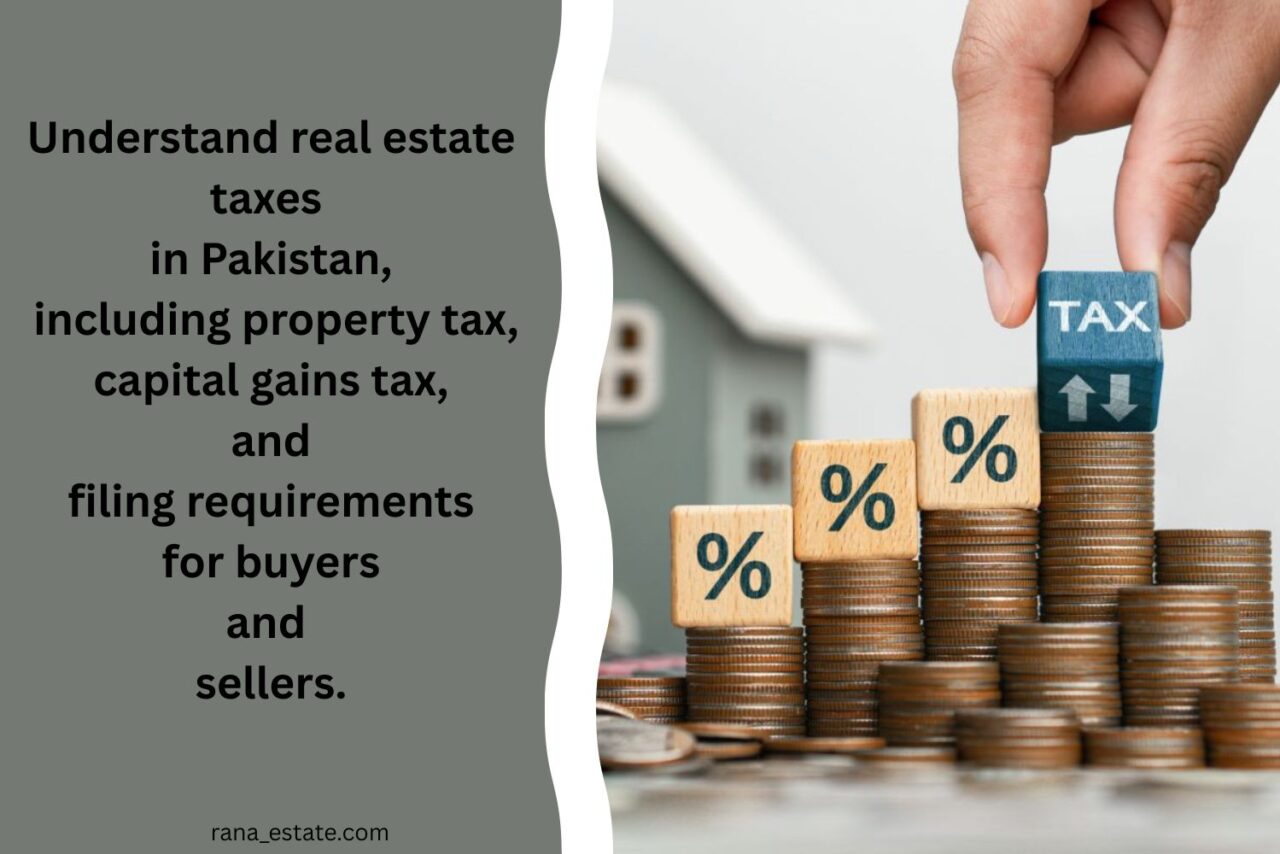

When people talk about property taxes in Pakistan, most assume it is only about capital gains tax or advance tax. In reality, the true financial burden of owning or transferring property in Pakistan lies in a wide network of registry fees, inteqal charges, municipal fees, cantonment board dues, and filer vs non-filer taxes. These costs quietly add up and often catch buyers and sellers by surprise.
Understanding these “real taxes” is essential before buying, selling, or inheriting property anywhere in Pakistan.
1. Registry (Registration) Fees – The Core Property Cost
Property registry fees are the most significant and unavoidable expense during a sale or purchase. This is the official fee paid to register the sale deed with the government record.
What Registry Fees Include:
- Stamp Duty (provincial tax)
- Registration Fee
- CVT (Capital Value Tax)
Each province sets its own rates, but typically registry-related charges fall between 7% to 10% of the DC (Deputy Commissioner) value of the property.
Why This Is a Real Tax:
Even if the market value is negotiated privately, the government charges registry fees based on official DC rates. This makes registry fees a guaranteed revenue source for the state, regardless of whether the buyer profits from the property later or not.
2. Inteqal Fees – Ownership Transfer Charges
Inteqal (mutation) is the legal process through which ownership is transferred in government land records. Without inteqal, the buyer is not legally recognized as the owner.
Key Inteqal Costs:
- Mutation fee
- Verification charges
- Patwari service charges
- Tehsildar approval fee
Inteqal fees may appear small individually, but combined they become a mandatory hidden tax. Delays, objections, or corrections can further increase costs through repeated visits and unofficial payments.
Why Inteqal Matters:
A registered deed without inteqal can still cause ownership disputes. Therefore, inteqal fees are non-negotiable real property taxes.
3. TMA (Tehsil Municipal Administration) Fees
TMA fees are municipal-level charges applied to property owners for local services.
Common TMA Charges:
- Property transfer fee
- Map approval fee
- Commercial conversion fee
- Building completion certificates
- Water and sanitation charges
These fees vary by city and tehsil and often increase quietly through notifications.
Why TMA Fees Are a Hidden Tax:
Even after paying registry and mutation charges, TMA approval is necessary for construction, renovation, and even electricity or gas connections. This makes TMA fees an ongoing indirect tax on property ownership.
4. Cantonment Board Fees – A Separate Tax System
Properties located within cantonment areas fall under Cantonment Boards, which operate independently of provincial governments.
Cantonment Property Charges Include:
- Annual property tax
- Transfer fee
- Map approval fee
- Commercial activity fee
- Water and conservancy charges
Cantonment taxes are often higher than municipal taxes and less flexible.
Why Cantonment Fees Are Significant:
Many prime urban areas fall under cantonments. Owners here face double pressure: higher yearly taxes and stricter regulations, making cantonment fees one of Pakistan’s most expensive real property tax systems.
5. Filer vs Non-Filer Property Taxes – The Biggest Financial Divide
One of the most impactful real property taxes in Pakistan is the difference between filer and non-filer rates imposed by the Federal Board of Revenue (FBR).
Advance Tax on Property Transactions:
- Filers pay lower advance tax
- Non-filers pay significantly higher rates
In many cases, non-filers pay double or triple the tax compared to filers when buying or selling property.
Why This Is a Real Tax:
This tax applies even if the transaction results in a loss. It is collected upfront, making it a guaranteed government income source.
6. Withholding Taxes on Buyers and Sellers
Property transactions trigger multiple withholding taxes:
Buyer-Side Taxes:
- Advance tax under Income Tax Ordinance
- Adjustable but paid upfront
Seller-Side Taxes:
- Capital gains tax (CGT)
- Advance tax deducted at source
These taxes are calculated based on holding period, DC value, and filer status, making them complex and costly.
7. Capital Gains Tax – Often Misunderstood
Capital gains tax (CGT) applies if a property is sold within a specified holding period.
Key Facts:
- Higher CGT for short-term holdings
- Reduced tax after longer ownership
- Zero CGT after a defined period (depending on law changes)
While CGT gets the most attention, in practice it is often smaller than registry and transfer-related taxes.
8. Annual Property Taxes – Ongoing Financial Pressure
Beyond transaction costs, owners pay recurring annual taxes such as:
- Urban Immovable Property Tax
- Municipal taxes
- Cantonment annual assessments
These taxes continue regardless of rental income.
9. Utility Connection and Approval Fees
Property ownership also involves:
- Electricity connection fees
- Gas connection charges
- Water approval costs
Without proof of paid registry, mutation, and municipal clearance, utilities cannot be connected—making these fees indirectly linked to property taxes.
10. The Reality: Property Taxes Are Fragmented but Heavy
Pakistan does not impose a single, transparent property tax. Instead, property taxation is spread across dozens of departments, including:
- Provincial revenue offices
- Local TMAs
- Cantonment Boards
- Federal Board of Revenue
This fragmentation makes property ownership expensive, confusing, and documentation-heavy.
Conclusion: Why These Are the “Real” Taxes of Property in Pakistan
The true cost of owning or transferring property in Pakistan is not limited to capital gains or income tax. The real property taxes are:
- Registry fees
- Stamp duty
- Inteqal charges
- TMA fees
- Cantonment Board taxes
- Filer vs non-filer advance taxes
- Withholding taxes
- Annual municipal charges
Together, these costs can exceed 10–15% of a property’s value, making them a major financial consideration.
For anyone planning to invest in real estate in Pakistan, understanding these hidden and real taxes is essential to avoid budget shocks, legal complications, and long-term financial stress.
Frequently Asked Questions (FAQs)
1. What are the main real estate taxes in Pakistan?
The main real estate taxes in Pakistan include registry (stamp duty, CVT, registration fee), inteqal (mutation) charges, advance withholding tax, capital gains tax, TMA fees, and cantonment board taxes. These costs together form the real financial burden of property transactions.
2. Why are registry fees so high in Pakistan?
Registry fees are high because they combine multiple government charges such as stamp duty, registration fees, and provincial taxes. These fees are calculated on the DC value, not market price, making them unavoidable even if the property is sold at a lower rate.
3. What is the difference between a filer and a non-filer in property transactions?
A filer is someone who submits an income tax return, while a non-filer does not. Non-filers pay much higher advance taxes when buying or selling property—often double or triple—making filer status extremely important for saving money.
4. Is inteqal necessary after property registry?
Yes. Registry records the sale deed, but inteqal legally transfers ownership in government land records. Without inteqal, the buyer may face legal disputes and difficulties in selling, inheriting, or constructing on the property.
5. What taxes apply to property in cantonment areas?
Properties in cantonment areas are subject to Cantonment Board taxes, including annual property tax, transfer fees, map approval fees, and commercial charges. These taxes are usually higher and stricter than municipal taxes.
6. Do I have to pay capital gains tax on every property sale?
No. Capital gains tax depends on the holding period of the property. If the property is held for a longer duration (as defined by law), CGT may be reduced or completely exempt.
7. Are TMA fees mandatory for all properties?
Yes. TMA fees are mandatory for approvals related to construction, maps, commercial conversion, and utility connections. These fees vary by city and are an ongoing cost for property owners.
8. Can property taxes in Pakistan exceed 10% of property value?
Yes. When registry fees, advance taxes, inteqal charges, and municipal fees are combined, total property-related taxes can easily exceed 10–15% of the property’s DC value.


Leave a Reply