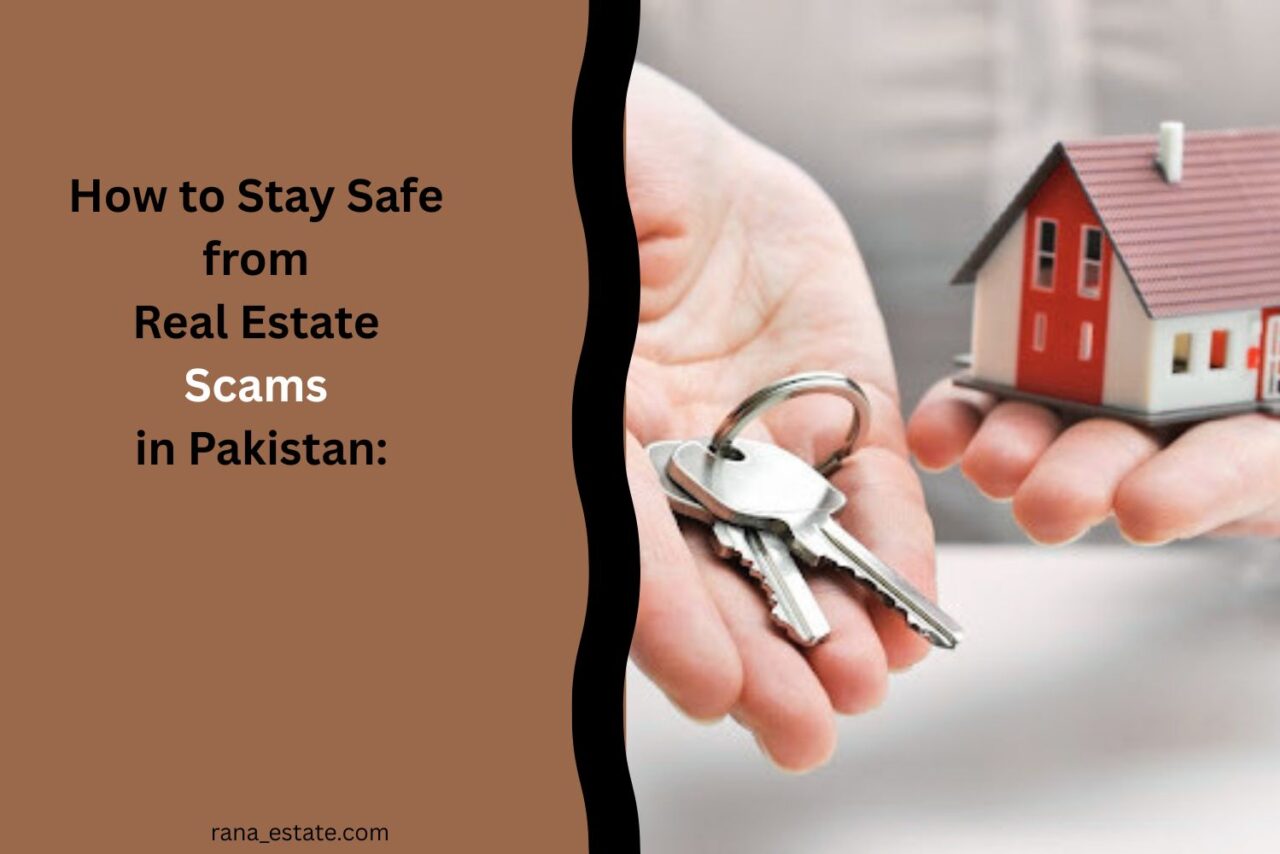

Pakistan’s real estate market is one of the most active investment sectors in the country. From sprawling housing societies in Lahore and Islamabad to high-rise apartments in Karachi, property investment continues to attract millions of local buyers and overseas Pakistanis looking to secure their financial future. But with rapid growth comes serious risk. Property fraud in Pakistan has become increasingly sophisticated, and thousands of investors lose their hard-earned savings every year to real estate scams that could have been avoided with the right knowledge.
Whether you are a first-time buyer, a seasoned investor, or an overseas Pakistani managing transactions from abroad, understanding the most common real estate scams in Pakistan is your first and most powerful line of defense.
Fake Property Documents and Title Fraud
One of the most widespread and financially devastating property frauds in Pakistan involves the use of forged ownership documents. Scammers create counterfeit sale deeds, title deeds, registry papers, and allotment letters to sell properties they do not legally own — or properties that do not exist at all.
Overseas Pakistanis are particularly vulnerable to this type of fraud because they cannot physically inspect documents or visit sites in person. A fraudster may present a professional-looking file, complete with fake stamps and signatures, and the buyer only discovers the fraud when attempting a transfer or resale.
How to protect yourself:
- Always verify the original title deed with the relevant land record authority — the Punjab Land Records Authority (PLRA) in Punjab, or equivalent bodies in other provinces.
- Request the Fard (official ownership record), Mutation Record (Intiqal), and No Objection Certificate (NOC) and cross-check them through official government portals.
- Never make any payment before a qualified property lawyer has independently verified all documents.
Illegal and Unapproved Housing Societies
Perhaps the single largest category of real estate fraud in Pakistan involves housing societies that operate without government approval. These schemes launch with flashy advertisements, model homes, and promises of rapid development — but they lack the mandatory NOC (No Objection Certificate) from the relevant development authority.
In 2025 alone, RUDA (Ravi Urban Development Authority) declared 44 housing societies illegal in Lahore, while the Rawalpindi Development Authority (RDA) launched a large-scale crackdown covering over 500 unapproved schemes across Rawalpindi, Taxila, Gujar Khan, Kallar Syedan, and Kahuta. Authorities have been registering police FIRs, sealing booking offices, and referring cases to the FIA Cyber Crime Wing. According to the LDA, there are over 90 illegal housing schemes in Lahore Division alone.
A particularly dangerous trick used by fraudulent developers is marketing their project with the phrase “NOC Under Process” — implying that approval is on the way. Development authorities have clearly warned that this phrase carries no legal standing whatsoever.
How to protect yourself:
- Before paying any booking fee, verify that the housing society is approved by the relevant authority: LDA (Lahore), CDA (Islamabad), RDA (Rawalpindi), SBCA (Karachi), or MDA (Multan).
- Check official websites for published lists of approved and illegal schemes.
- Remember: utility agencies such as IESCO, WAPDA, and SNGPL are legally barred from providing permanent electricity and gas connections to unapproved schemes.
Double-Selling of Property (Selling to Multiple Buyers)
Double-selling — where a single property is fraudulently sold to more than one buyer through fake documentation — is another alarmingly common property scam in Pakistan. The first buyer believes the deal is complete, while the fraudster simultaneously sells the same plot or house to a second or even third party.
This scam leads to complex legal disputes, years of court battles, and in many cases total financial loss for one or more buyers. It is particularly prevalent in high-demand areas of Lahore, Karachi, and Islamabad where buyers are often under pressure to transact quickly before prices rise.
How to protect yourself:
- Register the property transfer immediately after purchase. Delays in registering your plot are an open invitation for fraud.
- Check litigation records with the courts and revenue offices to ensure no existing claims or disputes are attached to the property.
- Use official e-stamping for all financial transactions and ensure every agreement is a registered, witnessed legal document — not just a private agreement.
Fake Real Estate Agents and Unauthorized Brokers
Pakistan does not yet have a nationally mandated licensing system for real estate agents, which means virtually anyone can claim to be a property dealer. Fraudulent agents operate by collecting commission from both buyers and sellers, demanding advance payments on behalf of sellers, and then vanishing with the funds.
Some unregistered agents work hand-in-hand with illegal society developers, earning commissions for every unsuspecting buyer they bring in. Others misrepresent property details, hide legal encumbrances, or create urgency to pressure buyers into quick decisions before due diligence can be done.
How to protect yourself:
- Work only with agents who have a verified, physical office and an established online presence that can be independently checked.
- Never pay advance amounts directly to an agent. All payments should go directly to the verified property owner via official bank channels.
- Use well-known property platforms with verification mechanisms to find agents, and check whether the listed price is consistent with comparable properties in the area.
Fake Online Listings and Digital Property Scams
The rise of social media and online property portals has opened a new front for real estate scams in Pakistan. Fraudsters create fake property listings on social media platforms, WhatsApp groups, and low-credibility websites, featuring attractive photographs, below-market prices, and urgent calls to action designed to pressure buyers.
After the buyer shows interest, the scammer requests a booking fee or advance payment — and disappears once the money is received. In many cases, the property shown in photographs belongs to a completely different city or does not exist at all. The RDA has specifically noted that fraudulent developers use misleading Facebook and YouTube campaigns to target overseas Pakistani investors who cannot visit sites in person.
How to protect yourself:
- Never make any payment — no matter how small — based purely on online listings or WhatsApp conversations.
- Always physically visit the property or send a trusted representative before committing any funds.
- Use only verified real estate portals with proper listing verification systems and avoid anonymous social media sellers.
Possession Fraud and Delayed Delivery Scams
Many investors in Pakistan buy plots or apartments in under-construction developments on installment plans, only to find that possession is repeatedly delayed — or never delivered at all. Developers collect full or partial payments across multiple installments, then cite construction delays, NOC issues, or financial problems as excuses for non-delivery.
In more serious cases, the developer abandons the project entirely after collecting funds from hundreds of buyers. Investors are then left with worthless file papers, no legal recourse, and no property.
How to protect yourself:
- Research the developer’s track record thoroughly before investing. Established developers with completed, delivered projects are far safer than new or unverified names in the market.
- Review the payment plan carefully, paying particular attention to possession timelines, penalty clauses for late delivery, and refund policies.
- Never pay the full amount upfront for an under-construction project. Structure payments to milestones tied to verified development progress.
Land Grabbing and Encroachment Fraud (Qabza Mafia)
Land grabbing — locally known as the qabza mafia — involves criminals illegally occupying vacant land, then selling it to unsuspecting buyers using fraudulent ownership documents. The seller may produce a fake title deed or forge mutation records to make the transaction appear legitimate.
This type of scam is especially dangerous because buyers can physically visit the plot, see their name on forged documents, and still lose everything when the real owner surfaces or authorities intervene. It is particularly common with plots in peripheral or newly developed areas where land records are still being digitized or are not easily accessible.
How to protect yourself:
- Always verify ownership through the Jamabandi (record of rights) and Girdawari (cultivation record) at the relevant Arazi Record Center or PLRA portal.
- Check for any ongoing litigation attached to the property by consulting the local civil courts.
- Mark your plot boundaries immediately after purchase and register the transaction without delay.
8. Bait-and-Switch and False Amenity Promises
Developers frequently market housing schemes with glossy brochures, animated videos, and promises of world-class amenities — schools, hospitals, parks, commercial zones, and 24/7 utilities. Buyers pay premium prices for these promised features, only to find that the actual development looks nothing like the marketing material.
Roads remain unpaved, utilities are not connected, promised amenities never materialize, and the “prime location” turns out to be on agricultural land far from any urban center.
How to protect yourself:
- Visit the actual development site — not the sales office or show home — and assess the real on-ground progress.
- Speak to existing file-holders or residents of the developer’s previous projects to get honest feedback.
- Ensure all amenity promises are written into the sale agreement as contractual obligations, not just verbal or marketing claims.
What to Do If You Fall Victim to Property Fraud in Pakistan
If you have been defrauded, act immediately:
- File an FIR at the local police station under fraud and criminal breach of trust provisions of the Pakistan Penal Code.
- Contact the FIA Cyber Crime Wing — particularly for online scams, fake social media campaigns, or cases involving overseas Pakistanis.
- Report to the relevant development authority (LDA, CDA, RDA, SBCA) for illegal housing society complaints.
- Hire a property lawyer to explore civil recovery options and assess whether a court injunction can protect your interests.
- Keep all evidence — receipts, bank transfers, WhatsApp messages, contracts, brochures, and identity documents of the seller or agent.
Final Thoughts: How to Stay Safe from Real Estate Scams in Pakistan
Pakistan’s property market offers genuine, long-term investment opportunities — but only for buyers who approach transactions with patience and rigorous due diligence. The golden rules are simple: verify every document independently, never pay without visiting the site, always use official banking channels, consult a property lawyer, and choose developers with a proven track record.
The most dangerous words in Pakistani real estate are “trust me” and “hurry, prices are going up.” Scammers rely on urgency and blind trust. Protect yourself by slowing down, asking the right questions, and verifying every claim through official sources before a single rupee changes hands.
READ ALSO:
Construction Cost Per Square Foot in Pakistan in 2026: Complete Guide with Updated Rates

Leave a Reply